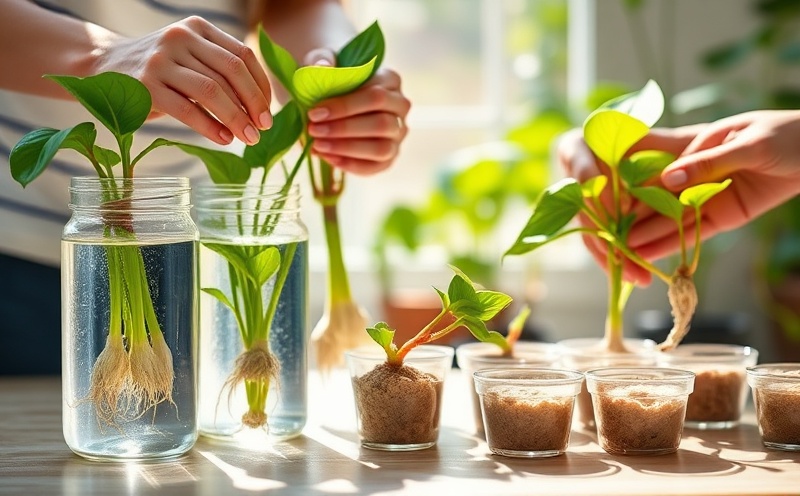
Propagation—growing new plants from existing ones—is one of the most rewarding and budget-friendly ways to expand your plant collection. Not only is it easy, but it also connects you more deeply to your plants. Let’s dive into the complete beginner’s guide to plant propagation.
Why Propagate Plants?
- Free plants: Turn one plant into many without spending money
- Share with friends: Gift propagated plants to fellow plant lovers
- Plant rescue: Save a leggy or overgrown plant by taking cuttings
- Faster growth: Propagated plants often grow faster than seed-grown varieties
- Sustainability: Reduce your carbon footprint by growing plants at home
Types of Propagation
Water Propagation (The Easiest Method)
Water propagation is the simplest way to start. Fill a glass with water, place a cutting in it, and watch roots develop over weeks.
Best for: Pothos, Philodendrons, Mint, Basil, Begonias, Impatiens, Spider plants
Steps:
- Take cuttings from healthy plants (4-6 inches with at least 2 nodes)
- Remove lower leaves so they don’t touch water
- Place cutting in a glass of water
- Change water every 2-3 days to prevent algae and bacterial growth
- Roots appear in 1-4 weeks depending on the plant
- Once roots are 1-2 inches long, pot in soil
Soil Propagation (More Direct Method)
Soil propagation goes straight from cutting to plant, skipping the water stage. It’s faster but requires more care.
Steps:
- Prepare a pot with moist, well-draining propagation mix (50% perlite, 50% peat moss)
- Take cuttings 4-6 inches long with 2-3 nodes
- Remove lower leaves
- Plant cutting 1-2 inches deep in moist soil
- Keep soil moist (not waterlogged) for 2-3 weeks
- Roots typically develop in 2-3 weeks
- Reduce watering frequency once established
Understanding Plant Nodes
A node is the small bump on a plant stem where leaves emerge and roots naturally develop. Cuttings must have at least 2 nodes to propagate successfully. Place the cutting so the lower node is below the soil or water line—this is where roots will form.
Best Time to Propagate
Spring and early summer (March-July) are ideal because plants are in growth mode. You can propagate year-round, but spring gives the best success rate.
Essential Propagation Supplies
- Sharp, clean scissors or pruning shears
- Glass jars or small pots
- Propagation soil (or regular potting mix with perlite)
- Small pot sizes (2-3 inches)
- Rooting hormone (optional but helpful)
Using Rooting Hormone
Rooting hormone contains growth hormones that stimulate root development. It’s optional but increases success rates, especially for difficult plants.
How to use:
- Dip the cutting’s base in rooting hormone powder
- Tap off excess powder
- Place in water or soil as usual
Plant Propagation Cheat Sheet
| Plant | Best Method | Time to Root | Difficulty |
|---|---|---|---|
| Pothos | Water or soil | 1-2 weeks | Very easy |
| Philodendron | Water or soil | 1-3 weeks | Very easy |
| Spider Plant | Babies or water | 1-2 weeks | Very easy |
| Mint | Water | 1-2 weeks | Very easy |
| Begonia | Water | 2-3 weeks | Easy |
| Impatiens | Water | 2-4 weeks | Easy |
| Succulents | Leaf cuttings | 2-4 weeks | Easy |
| Coleus | Water | 1-2 weeks | Very easy |
| Peperomia | Water or soil | 2-3 weeks | Easy |
Propagating Succulents (Special Case)
Succulents propagate differently. They can grow from individual leaves!
Steps:
- Gently remove a healthy leaf from the plant
- Let the leaf dry for 2-3 days (very important—prevents rot)
- Place on moist succulent soil (don’t bury it)
- Mist lightly every few days
- Tiny rosettes appear at the leaf’s base in 2-4 weeks
- Once established, treat like a regular succulent plant
Troubleshooting Propagation Problems
Cutting isn’t developing roots:
- Check water daily—it should be fresh
- Ensure you used healthy parent plant material
- Provide bright, indirect light
- Be patient—some plants take longer
Cutting is rotting:
- Change water more frequently
- Use sterilized soil for soil propagation
- Reduce watering frequency
Mold on water:
- Change water daily
- Use a clean glass
- Provide better air circulation
Moving Your Propagated Plant to Soil
Once roots are 1-2 inches long:
- Gently pot the cutting in moist potting soil
- Water lightly to settle soil
- Place in bright, indirect light
- Water when top inch of soil is dry
- Avoid fertilizing for 4-6 weeks (let roots establish)
Final Thoughts
Propagation is one of the easiest and most rewarding plant activities. Start with pothos or spider plants—they’re nearly impossible to fail with. Soon you’ll have multiple plants to enjoy or share with friends. There’s nothing quite like the joy of growing a completely new plant with your own hands!
Ready to propagate? Visit our plant shop to find the perfect plant to propagate from!